


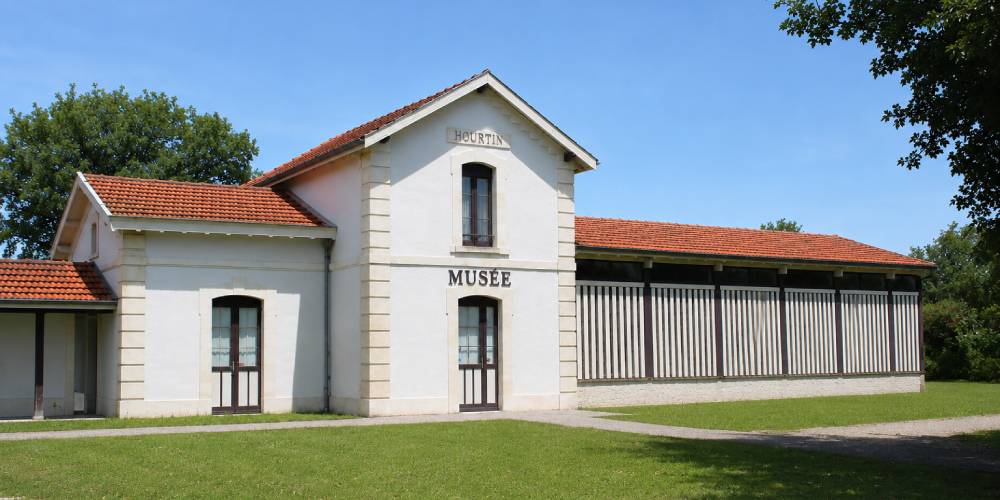
The Musée d’Hourtin Regard sur le passé occupies the village’s former railway station. It’s close to the lake and just 1 kilometer from our Campsite in Gironde. Here you’ll find objects, photos and testimonials from the foresters, resin workers, longshoremen and fishermen who shaped the Médoc. Entrance is free, and the local association Demain Hourtin Mon Village warmly welcomes you.
Here’s everything you need to know before your visit: collections, practical information and ideas for nearby activities.
Key points to remember
- A former railway station in Hourtin houses this museum, which was transformed into a place of remembrance in 2007.
- The collections retrace the lives of the Médoc’s foresters, resin workers, longshoremen, fishermen and shepherds.
- Admission remains entirely free in summer and off-season.
- In July and August, the museum is open daily, mornings and late afternoons.
- Passionate local volunteers, the members of Demain Hourtin Mon Village keep the site alive.
What does the Hourtin museum have to say about the past?
The Regard sur le passé museum in Hourtin traces the history of the men and women who have shaped the area. You’ll be taken on a tour of several themed rooms, where antiques, photographs and documents tell the story of daily life in the past. Each room illustrates a profession or a key period in the history of the village.
The collections give voice to the pioneers of the Médoc through their tools, clothes and stories. Here are some of the figures you’ll come across during your visit:
- Foresters and lumberjacks have maintained the Landes forest for generations.
- Formerly gemmakers, resin makers harvested the precious maritime pine resin.
- Longshoremen’s work was based on techniques that have now disappeared.
- By the lake, fishermen adapted their activities to the seasons and the catch.
- Shepherds and farmers looked after the local herds and farmland.
All this makes for a real journey back in time, ideal for understanding the soul of the Médoc.
A former railway station transformed into a Medoc remembrance site
The history of the Musée d’Hourtin Regard sur le passé begins in the former railway station. The building is located at 2 bis avenue de la Gare. Volunteers restored this long-disused site, then converted it into a museum space. It opened in 2007.
The Demain Hourtin Mon Village association, founded by heritage enthusiasts, has spearheaded this transformation. More than 30 years after its creation, the structure brings together an all-volunteer team. Each member shares with visitors a sincere attachment to the village’s history.
The choice of the train station makes perfect sense. It symbolizes the exchanges and travel that marked life in the Médoc in days gone by. Today, it welcomes visitors who have come to understand how Hourtin was built, generation after generation.
Good to know: the association’s volunteers often know anecdotes about the village. They’re happy to share their memories with visitors. If you’re lucky enough to bump into a Hourtinois during your visit, take the time to chat. You’ll come away with stories you’ve never heard before, not even in the paper guides or on the Internet.
Practical information for visiting the museum
Before planning your visit to the Regard sur le passé museum in Hourtin, here is some useful information you should know:
- Dates and opening hours: in July and August, the museum is open daily from 10am to 1pm and from 4pm to 7pm.
- Address: the museum is located at 2 bis avenue de la Gare, 33990 Hourtin.
- Admission: free for adults and children.
- Services: a parking lot is located in the immediate vicinity of the building.
What to do around the museum during your stay in Hourtin?
Next to the museum, there are a number of activities to extend your day. Lac d’Hourtin, France’s largest freshwater lake, invites you to swim and paddle. Kayaking and windsurfing are also available. The wild Atlantic beaches are around 10 km away. Perfect for surfing and long strolls along the seafront. The Médoc vineyards, just next door, open their doors for tastings of the finest local vintages. For walking and cycling enthusiasts, the Parc Naturel Régional du Médoc offers kilometers of trails. You’ll pass through unspoilt natural landscapes.
For a comfortable stay, our Campsite Les Ourmes welcomes travelers less than 5 minutes from the museum. This address combines culture, nature and relaxation, ideal for a family or couple vacation in Gironde!
FAQ – Musée d’Hourtin Looking back
Is the Hourtin museum A look at the past paying?
No, the Musée d’Hourtin Regard sur le passé is entirely free, for adults and children alike. This free admission reflects the voluntary commitment of the Demain Hourtin Mon Village association, which has run the museum since its inception. Access is free during opening hours, with no need to book in advance.
How long does the tour take?
To visit the Musée d’Hourtin Regard sur le passé in peace, allow around 1 hour. This is enough time to explore the various themed rooms and chat with the volunteers on hand. Local heritage enthusiasts will find it easy to linger longer.
Is the museum accessible to children?
Yes, the Hourtin Regard sur le passé museum is perfect for families. Children discover many intriguing antique objects. They can observe the gemmaking tools and everyday utensils of yesteryear. The volunteers know how to adapt their talk to make the visit accessible and fun for the youngest visitors.
What other cultural activities are available in Hourtin?
Hourtin offers several cultural activities to complement the Regard sur le passé museum. You can explore the village church or walk along the lake shore. An excursion to Soulac or Lesparre is also a good way to visit other Médoc heritage sites. The tourist office provides a program of seasonal events.
Do I need to book to visit the museum?
No, admission to the Regard sur le passé museum in Hourtin is free, without prior Book. You can visit during opening hours, on your own, with your family or in a group. For school groups or associations, please contact the Demain Hourtin Mon Village association in advance.